
Filming in Utah in Winter: A Planning Guide for Business Video Shoots
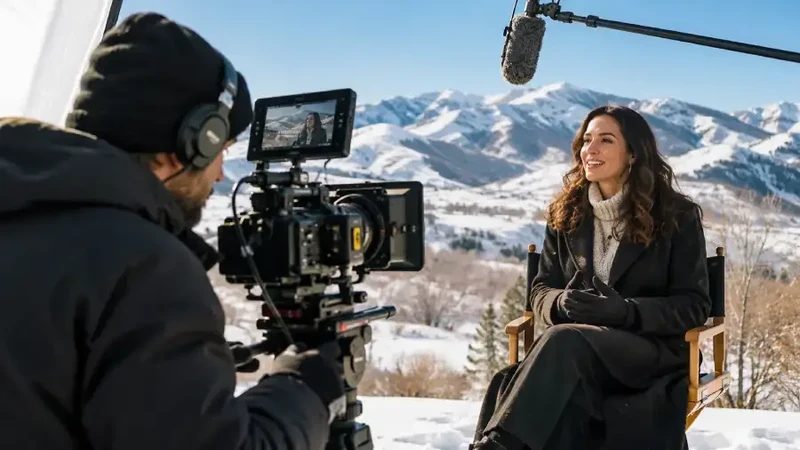
Every year around this time, someone asks us whether they should wait until spring to shoot their video. It’s a fair question. Utah winters bring short days, hazy valleys, and canyon roads that can close in an hour. They also bring clear blue mornings and snow-covered peaks that make a brand film look expensive.
The short answer: yes, filming in Utah in winter works well for most business videos, as long as the plan accounts for four things. Interiors and events can run on a normal schedule. Exteriors need a weather backup day, a shoot plan built around roughly nine hours of daylight, and a contingency for valley inversions. Anything in the canyons or at a ski resort needs extra lead time for permits and crew access.
Key Takeaways
Indoor interviews, product shoots, office B-roll and events don’t need to wait for spring. Book them in winter and keep momentum.
Salt Lake City gets about 9 hours and 14 minutes of daylight on the shortest day of the year, so exteriors need to be scheduled to the minute.
Inversions are most likely in December, January and early February. If the mountains matter to your shot, plan a backup day or a location above the haze.
Big and Little Cottonwood Canyon traction rules can kick in before a storm. Crew vehicles need the right tires to get to resort locations.
Many Wasatch ski resorts sit on National Forest land, so a resort shoot can need both resort approval and a Forest Service filming permit.
Table of Contents
What to Shoot in Winter (and What to Push to Spring)
Inversions: The Utah Winter Problem Most Out-of-State Crews Miss
Plan the Day Around the Light
Snow on Set: Exposure, Footprints and Salt Stains
Keeping Talent and Gear Working in the Cold
Ski Resorts, Canyons, and Permits
Weather Days and What to Put in the Contract
Booking a Q1 Shoot Without Losing Momentum
Frequently Asked Questions
What to Shoot in Winter (and What to Push to Spring)
Most business video doesn’t care what month it is. A leadership interview in a conference room looks the same in January as it does in June. So does a product demo, a training module, or a testimonial filmed in a customer’s office. If those are on your list, there’s no reason to let the calendar stall them.
We sort winter projects into three groups when clients ask:
Shoot now, no adjustments: interviews, office and facility B-roll, product and food shoots, training content, and conference coverage. Our event video production calendar is actually busy in Q1 because so many companies hold kickoffs and sales meetings in January.
Shoot now, with a backup plan: brand films and corporate videos with a few exterior shots, drone footage, and anything where the snowy Wasatch is a feature rather than a problem.
Probably wait: spots that need green grass, patio dining, summer recreation, or a long day of outdoor dialogue. If your commercial video production needs a June look, shooting it in February just means fighting the season.
Winter can also be the look you want. A ski brand, an outdoor gear company, a holiday campaign, or a Utah tourism piece benefits from fresh snow on the peaks. Our guide to outdoor video production locations in Salt Lake City covers several spots that are just as strong in winter, provided you can get to them.
Inversions: The Utah Winter Problem Most Out-of-State Crews Miss
An inversion is a layer of warm air sitting on top of cold air in a valley, which traps haze and pollution near the ground. The Wasatch, the Oquirrhs and Traverse Mountain form a basin around the Salt Lake Valley that holds that cold air in place and blocks the winds that would clear it (Utah DEQ). On camera, an inversion turns a crisp skyline into flat gray soup, and the mountains can disappear for days.
The timing is fairly predictable. Fine-particle pollution in the Salt Lake Valley exceeds national air quality standards on about 18 days a year on average, and most of those days fall in December, January and early February, when strong multi-day inversions are most likely (Utah Foundation). Utah Valley and Cache Valley see the same pattern.
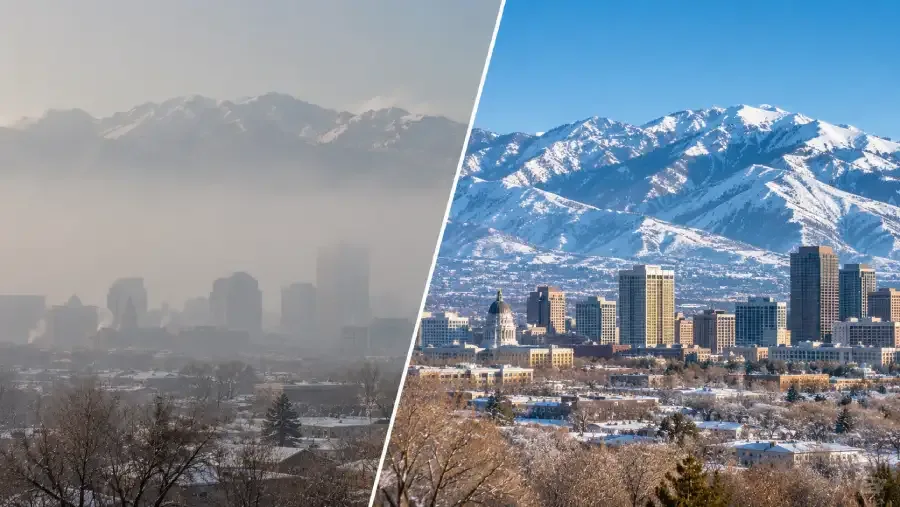
Here’s how we plan around it:
Check the air quality forecast a week out. Multi-day inversions usually build gradually, so you can see them coming and move an exterior day before anyone is on set.
Go up instead of waiting. The haze sits in the valley. A location in the foothills or partway up a canyon is often above it, with clear sky and a sea of fog below, which can look better than a normal clear day.
Keep the mountains optional. Frame key exterior shots so they still work if the background goes gray, and treat the big mountain vista as a bonus pickup on a clear morning.
Shoot the day after a storm. Fresh weather systems tend to scour the valley clean. The morning after a storm clears is often the best light of the whole winter.
Plan the Day Around the Light
Salt Lake City gets about 9 hours and 14 minutes of daylight on the winter solstice, compared with about 15 hours on the longest day of summer (sunrisesunset.io). That’s six fewer hours to work with, and the sun stays low all day, which affects every exterior shot.
Month | Approx. sunrise (SLC) | Approx. sunset (SLC) | What it means for a shoot |
Early December | 7:35 a.m. | 5:01 p.m. | Earliest sunsets of the year; exteriors wrap by 4:30 p.m. |
Late December | 7:48 a.m. | 5:08 p.m. | Shortest days; one exterior location per day is realistic |
Early January | 7:50 a.m. | 5:15 p.m. | Latest sunrises; start interiors early, exteriors mid-morning |
Late February | 7:10 a.m. | 6:05 p.m. | Days lengthening fast; two exterior setups become comfortable |
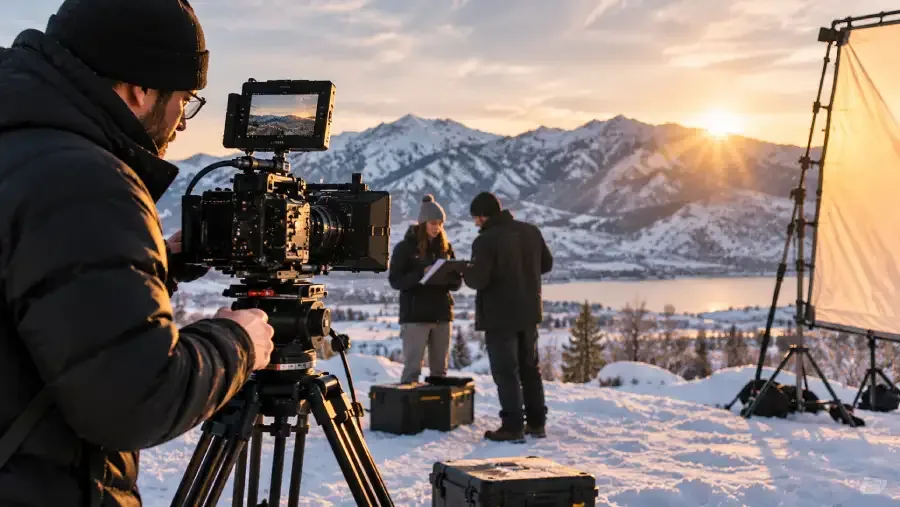
Times are approximate and shift by a minute or two each day. That low winter sun isn’t all bad. It gives you long, soft light for much of the day instead of the harsh overhead sun of a July noon, and golden hour lands around 4:00 p.m., which is easy to schedule. The tradeoff is that you get one shot at it.
A winter day we’d typically build for a brand film with interiors and exteriors looks like this: crew call around 7:00 a.m., interiors and interviews from 8:00 to 11:00, exteriors from late morning through about 3:30, a golden-hour shot or two, and back inside for any remaining B-roll after dark. If you’ve never been on a full production day, our post on what a full shoot day actually looks like walks through the rhythm.
Snow on Set: Exposure, Footprints and Salt Stains
Snow is the most reflective thing you’ll ever put in front of a camera. It pushes auto exposure toward gray, blows out highlights, and bounces blue light into faces. A professional crew handles this with manual exposure, ND filters, and a bit of extra fill on the talent. The bigger surprises tend to be practical, not technical:
Footprints ruin clean snow. We scout and mark the hero area before anyone walks through it, and plan crew paths along the edges of the frame.
Plowed lots look messy on camera. Gray slush berms and salt-crusted cars are hard to fix in post. Check what the parking lot or storefront actually looks like the morning of the shoot.
Salt stains show on wardrobe and floors. Dark shoes and pants pick up white residue fast, and so do lobby floors when the crew walks in and out all day. Floor runners and a wardrobe check before each setup save time.
Breath shows up. Visible breath can look great in a cold-weather spot and distracting in an interview. Decide which you want before you pick an exterior interview location.
Keeping Talent and Gear Working in the Cold
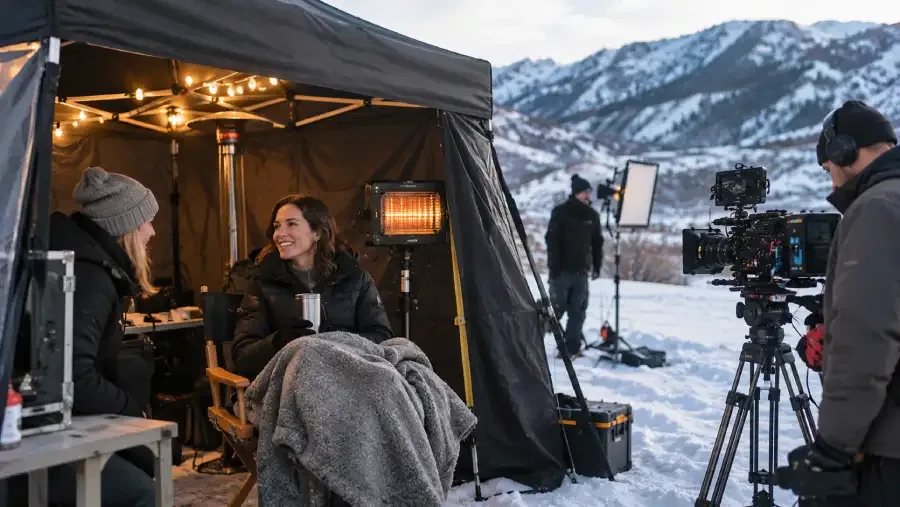
People get cold faster than equipment, and cold people give stiff performances. If your CEO or a customer is going to be on camera outdoors, plan their comfort as carefully as the shot list.
Keep a warm staging area within a short walk of the set: a lobby, a heated vehicle, or a pop-up tent with a heater for remote locations.
Roll exterior dialogue in short takes and bring talent back inside between setups. Cheeks and noses redden quickly, which makeup can only partly cover.
Plan wardrobe for the look and the temperature. Layers under a coat work; a suit jacket alone in 25 degrees doesn’t, no matter how tough someone is.
Have hand warmers and hot drinks on set. It sounds small. It changes the mood of the whole day.
On the gear side, batteries drain noticeably faster in the cold, so we carry extras and keep spares in inside pockets. Moving a camera from a cold exterior straight into a warm lobby can fog lenses and sensors, so we bag gear before bringing it in and let it warm up gradually. Drones are affected too: shorter flight times and stiffer controls mean shorter, more planned flights.
Ski Resorts, Canyons, and Permits
Utah’s winter scenery is a short drive from Salt Lake City, but getting a crew there takes more planning than in summer. Big Cottonwood Canyon (SR-190) and Little Cottonwood Canyon (SR-210) have stricter traction requirements than other roads, including a minimum tire tread depth of 5/32 inch when the rules are in effect, and UDOT can now activate them before a storm arrives (UDOT). A crew van with worn tires can be turned around at the mouth of the canyon, which is an expensive way to lose a morning.
Resort shoots add a permitting layer. Brighton and Solitude in Big Cottonwood, and Alta and Snowbird in Little Cottonwood, depend on Forest Service special-use permits for most of their terrain (University of Utah Libraries). That means commercial filming on those slopes can require the resort’s approval and a commercial filming permit from the Uinta-Wasatch-Cache National Forest, which asks for applications at least 10 business days before the shoot (U.S. Forest Service). The Utah Film Commission notes that federally managed land usually takes at least 15 business days to process (Utah Film Commission). Build in three weeks to be safe.
Park City has its own rhythm in winter: peak ski weeks, holiday crowds, and limited parking in Old Town. If you’re planning a shoot there, our Park City video production page covers the local details.
Weather Days and What to Put in the Contract
A weather day is a backup shoot date held in the schedule in case conditions make the original date unworkable. For any winter shoot with meaningful exteriors, we recommend holding one. It’s the single cheapest insurance in winter production.
Before you sign, make sure the agreement answers these questions:
Who makes the weather call, and by what time the day before?
What happens to crew, talent and location fees if the shoot moves? Is there a postponement fee, and how much notice avoids it?
Is the backup date already held by the crew, the talent and the location, or just pencilled in?
If only part of the day is lost, can interiors still run and exteriors move to the backup date?
Who covers extra costs like tire chains, warming tents, or a snow-removal crew for the location?
None of this needs to be complicated. A short paragraph in the production agreement and a clear call time the night before prevent most arguments.
Booking a Q1 Shoot Without Losing Momentum
The biggest risk of winter isn’t the snow. It’s the project that gets pushed to spring and then to summer because nobody wanted to deal with the weather. Q1 is often when new budgets open up, and if you planned for video in your 2027 video budget, January and February are a good time to get the interior-heavy pieces done and save the exterior-heavy pieces for April or May.
Booking in winter also tends to be easier. Late spring and early fall fill up first because the light and weather are easiest, so crews and locations usually have more open dates in January and February. Work backward from when you need the video live: for most projects that means a strategy call four to eight weeks before the deadline. Our guide on how long video production takes breaks down each stage.
Frequently Asked Questions
Can you film outdoors in Utah in winter?
Yes. Outdoor filming works well in Utah winters with the right planning: a weather backup day, exteriors scheduled around about nine hours of daylight, and a plan for inversions. Clear days after a storm often give the best light of the year.
What are the best months to film outdoors in Utah?
Late April through June and September through mid-October are the easiest months for outdoor shoots, with long days and stable weather. December through early February is the hardest stretch because of short days and inversions, though it’s ideal for snow-focused content.
How do inversions affect video shoots in Salt Lake City?
Inversions trap haze in the valley, flatten the light, and can hide the mountains for days. They’re most common in December, January and early February. Crews work around them by watching the air quality forecast, moving exteriors to higher ground, or holding a backup day.
Do you need a permit to film at a Utah ski resort?
Usually you need the resort’s permission, and resorts on National Forest land can also require a Forest Service commercial filming permit. The Uinta-Wasatch-Cache National Forest asks for applications at least 10 business days ahead. Plan for about three weeks to cover both.
Does a winter shoot cost more?
Interior shoots cost the same in any season. Exterior-heavy winter shoots can add a weather day, warming equipment, extra batteries, or vehicles that meet canyon traction rules. Those additions are usually small next to the cost of a full reshoot on a bad-weather day.
Planning a Winter Shoot?
Winter in Utah rewards crews that plan for it and punishes the ones that don’t. Eagle Wing Productions is based in Salt Lake City and films year-round across the Wasatch Front, Park City and Utah County, from conference rooms to canyon roads. See our video production in Salt Lake City, or book a free strategy call and we’ll tell you honestly what to shoot this winter and what to save for spring.
Start Your Project
Ready to Bring Your Story to Video?
Book a free strategy call, and we'll help you figure out which type of video will deliver the best ROI for your business.