Video Post-Production Explained: What Actually Happens After the Shoot
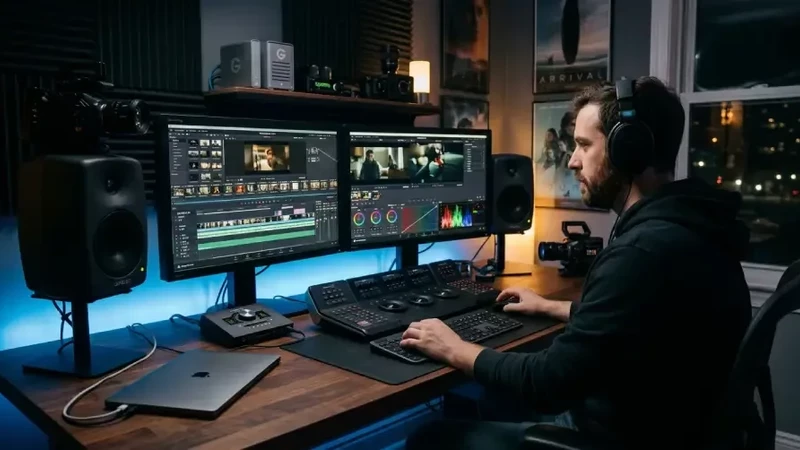
The camera gear is packed up, the crew has left the building, and your video still doesn't exist yet. This is the moment a lot of first-time clients get nervous: filming felt like the finish line, but it's really only the halfway point. Post-production is where a video actually becomes a video, and it typically covers editing, color correction, sound design, graphics, and a round or two of revisions before final delivery. Depending on the project's length and complexity, that process usually runs anywhere from one to six weeks. Here's what happens in each stage, how long it realistically takes, and what tends to slow it down.
Key Takeaways
Post-production covers everything after filming: editing, color, sound, graphics, and revisions.
A simple social clip might take one to two weeks; a full brand video or documentary can take four to six.
The biggest delays come from unclear feedback rounds and missing assets, not the editing itself.
A short planning conversation before the shoot (not just during editing) prevents most post-production slowdowns.
Video post-production is every step that turns raw, unedited footage into a finished, publishable video. It includes organizing and reviewing footage, building an edit, correcting and grading color, adding sound and music, layering in graphics or titles, and exporting the final files in the formats a client needs. Nothing that happens during filming counts as post-production. Everything that happens to the footage after the camera stops rolling does.
Who's Actually Involved in Post-Production
On a small project, one editor might handle every stage described below. On a larger brand video or documentary, the work usually splits across a few specialists: an editor who builds the story and pacing, a colorist who handles correction and grading, a sound designer or mixer who cleans up dialogue and builds the audio mix, and a motion graphics artist for titles, lower thirds, or animated logo treatments.
Knowing this upfront helps explain why a more complex video takes longer: it isn't one person working slowly, it's several specialized passes happening one after another so each part gets real attention instead of being rushed by a single generalist trying to do all of it at once.
The Post-Production Timeline: From Raw Footage to Final Delivery
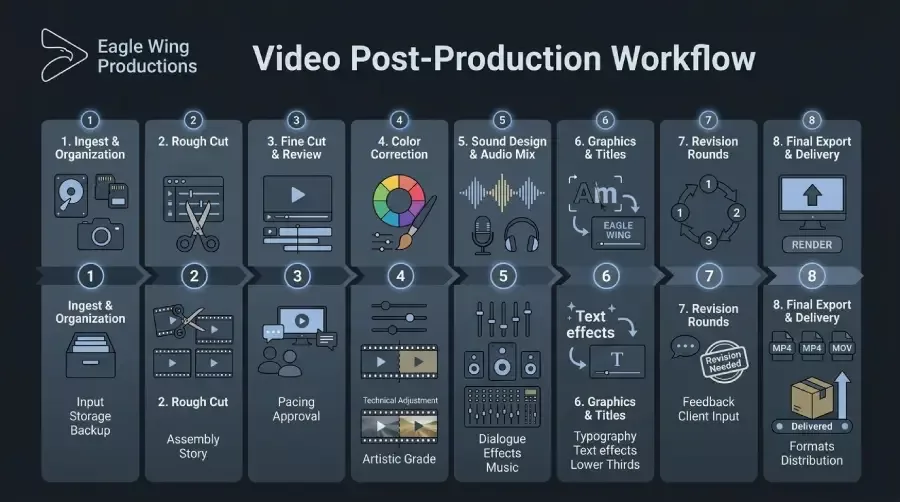
Most projects move through the same sequence of stages, even though the amount of time spent in each one changes a lot based on the video's length, the amount of footage shot, and how many people need to sign off on the final cut.
Ingest and Organization
Before anyone touches an edit, the footage has to be backed up, organized, and logged. An editor working on a two-day shoot might be sorting through several hours of raw video, interview audio, and B-roll. Skipping this step to save time almost always costs more time later, since a disorganized project means hunting for the right clip instead of editing.
Rough Cut (Assembly Edit)
The rough cut is the first real assembly of the video: interview soundbites and key footage placed in roughly the right order, with no color work, sound mixing, or graphics yet. It's intentionally unpolished. The goal at this stage is to confirm the story and structure are right before investing time in finishing details that might get cut anyway.
Fine Cut and Client Review
Once the story holds up, the fine cut tightens pacing, trims unnecessary sections, and smooths transitions. This is usually the first version a client actually reviews. Clear, consolidated feedback at this stage (one round of notes covering everyone's input, not five separate emails) is the single biggest factor in whether a project stays on schedule.
Color Correction and Color Grading
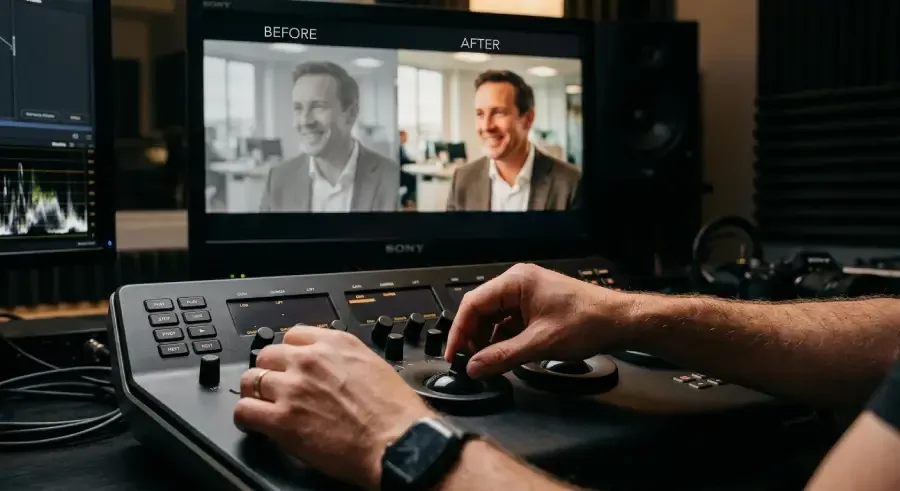
Color correction fixes technical issues: footage that's too dark, mismatched white balance between cameras, or shots that look different depending on where they were filmed that day. Color grading goes further, applying a consistent visual style or mood across the whole video. Both matter more than most first-time clients expect, since even a strong edit looks unfinished if the color is inconsistent from shot to shot.
Sound Design, Music, and Mixing
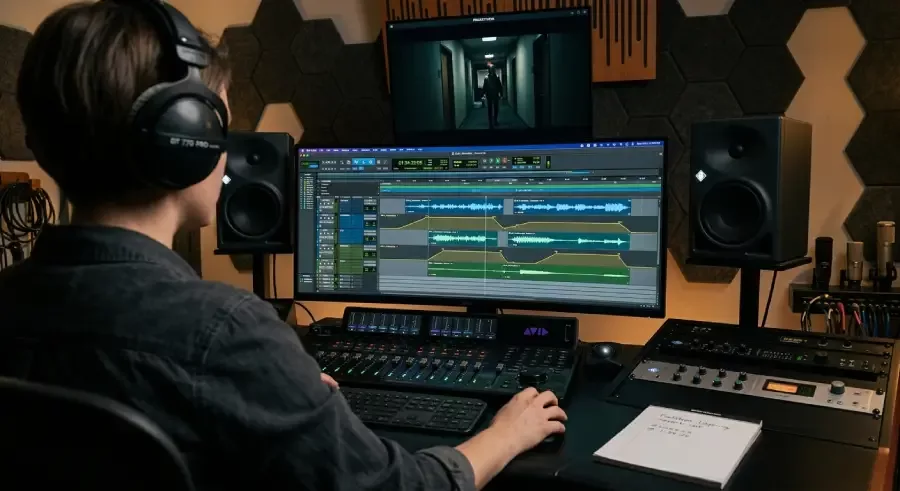
Dialogue gets cleaned up (removing hums, wind noise, and uneven volume between clips), music is selected and licensed, and everything gets mixed so dialogue stays clear over the music instead of competing with it. Poor audio is one of the fastest ways to make an otherwise well-shot video feel unprofessional, which is why experienced editors treat sound as its own dedicated pass rather than an afterthought.
Graphics, Titles, and Motion Elements
Lower thirds (the name and title captions that appear over an interview), logo animations, captions, and any motion graphics get added in this stage. For brand videos, this is also where a company's colors, fonts, and logo treatment get applied consistently, so the video looks like it belongs to that brand rather than a generic stock template.
Revision Rounds
Most production agreements include one or two rounds of revisions built into the timeline. Revisions go fastest when feedback is specific ('trim the second interview answer by 10 seconds' beats 'this feels long') and consolidated from every stakeholder into a single list, rather than trickling in over several days.
Final Export and Delivery
The finished video gets exported in whatever formats and aspect ratios the client actually needs (a landscape file for a website, a vertical cut for Instagram or TikTok, captions burned in for social, and so on). This step is quick on its own, but it's where projects stall if the deliverable list wasn't confirmed earlier, since re-exporting five extra formats after the fact takes real time.
How Long Does Video Post-Production Actually Take?
Most videos take between one and six weeks in post-production, depending on length and complexity: a short social clip or single-interview testimonial usually wraps in one to two weeks, a typical corporate or promotional video runs two to four weeks, and a longer documentary-style or multi-location project can take four to six weeks or more.
Project Type | Typical Post-Production Timeline |
Short social clip or single-interview testimonial | 1 to 2 weeks |
Standard corporate or promotional video (3 to 6 minutes) | 2 to 4 weeks |
Multi-location, multi-interview, or documentary-style project | 4 to 6+ weeks |
Event recap or highlight reel | 1 to 3 weeks |
These ranges assume feedback comes back within a few business days at each review point. Slow or scattered feedback is the most common reason a project's actual timeline runs longer than its estimated one.
A few specific factors move a project up or down within these ranges: the number of interviews (each one adds review and syncing time), how many people need to approve the final cut, whether the video needs licensed music versus an original score, and how many final formats are required. A single-interview testimonial with one decision-maker will move faster than a five-location brand video with a marketing committee, even if both videos run the same final length.What Slows Post-Production Down (and How to Avoid It)
The editing itself is rarely what stretches a timeline. The real delays tend to come from missing brand assets (logos, fonts, or brand guidelines that should have been shared before editing started), feedback that arrives from multiple people at different times instead of one consolidated round, and scope that changes mid-edit, like adding a new deliverable format after the cut is already locked. Music licensing can also add unexpected time if a specific commercial track is requested late in the process, since clearing the rights to some songs takes longer than editing the video itself.
Most of this is preventable, but it has to be prevented before the camera ever rolls, not fixed during editing. That's exactly what a video consulting conversation up front is for: agreeing on deliverable formats, the number of feedback rounds, and who has final sign-off before production even starts, so post-production runs on a schedule instead of guesswork.
What to Expect From Post-Production With a Full-Service Video Partner
When post-production is handled in-house by the same team that filmed the project, there's no handoff gap between the shoot and the edit; the editor already knows the story, the interviews, and what the client cares about, instead of starting from a folder of unlabeled files. That continuity tends to show up most in the first cut: it usually needs fewer structural changes, because the person building it was in the room when the interviews happened and already knows which answers actually matter.
That's the model behind Eagle Wing's corporate video production work for Salt Lake City area businesses: the same team plans the shoot, films it, and carries it through editing, color, sound, and delivery, with a clear timeline and revision structure set at the start so there are no surprises once the footage is in the edit bay.
Frequently Asked Questions About Video Post-Production
How many revision rounds are normal in video post-production?+
Most production agreements include one to two rounds of revisions in the base timeline. Additional rounds are usually possible but can extend the delivery date, so it's worth confirming this number before the project starts.
Can I see the footage before it's edited?+
Some production teams offer a raw footage review or a rough cut screening before the fine cut stage. This is worth asking about upfront if it matters to you, since not every workflow includes it by default.
What file formats will I get when the video is delivered?+
A finished project typically includes a master file plus whatever platform-specific versions you need, such as a vertical cut for social media or a captioned version for accessibility. Confirm your full list of deliverables before editing begins so nothing has to be re-exported later.
Why does color grading matter if the footage already looks good?+
Color correction fixes technical inconsistencies between shots and cameras; color grading applies a consistent look and mood across the entire video. Skipping grading is usually what makes an edit feel slightly 'off' even when each individual shot looks fine on its own.
What's the difference between a rough cut and a fine cut?+
A rough cut is a rough assembly used to confirm the story and structure are right. A fine cut refines pacing and detail and is usually the first version sent to a client for review.
Do I need to provide anything before post-production starts?+
Yes. Logos, brand fonts, brand color codes, any required legal disclaimers, and a list of the exact file formats you'll need should all be shared before editing begins. Providing these upfront is one of the easiest ways to avoid a delay later in the process.
Conclusion
Post-production is where a shoot actually becomes a finished video, and understanding the stages, from organizing footage through color, sound, and final delivery, makes it much easier to set a realistic timeline and give feedback that keeps a project moving. If a project's post-production keeps running long, the fix usually isn't a faster editor; it's a clearer plan set before filming even starts.
Planning a video project and want a realistic timeline before you commit to a date? A short video consulting conversation can map out the full schedule, from pre-production through final delivery, before a single frame is shot.
Start Your Project
Ready to Bring Your Story to Video?
Book a free strategy call, and we'll help you figure out which type of video will deliver the best ROI for your business.