
Social Issue Awareness Documentaries: Why They Matter For Your Mission
Sometimes a topic hits you hard. You feel it in your chest. You see something happening in your community and think… this isn’t right. Or this needs help. Or people need to see what’s really going on.
That moment is usually where a social issue documentary starts.
A simple idea. A story that shouldn’t stay quiet. A problem that needs more light. And sometimes the best way to show it is through film. Clear. Honest. Human.
In Utah, you see these moments everywhere. Families struggling in silence. Nonprofits doing work that goes unnoticed. Teens facing tough choices. Local groups trying to get more awareness for things like homelessness, addiction, food insecurity, foster care shortages, or community safety. These aren’t small things. They’re real. And when you show them on video, people finally pay attention.
That’s what a social issue documentary does. It puts truth on the screen. And when it’s done well, it creates understanding. Action. Change.
Below is everything you need to know before making one.
FAQ
What is a social issue documentary?+
It’s a video that tells a real story about a challenge, need, or situation that affects people or communities. It’s honest. It’s emotional. It’s made to raise awareness and spark conversation.
Who should create one?+
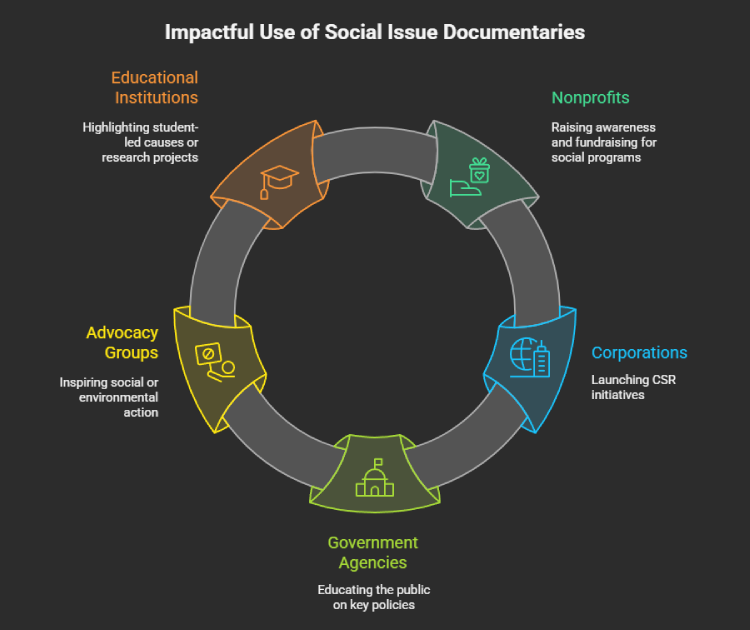
Nonprofits, community groups, schools, faith groups, and even Utah businesses wanting to highlight a cause they support. Anyone trying to get people to stop scrolling and finally care.
How long should it be?+
Usually 3 to 6 minutes. Short. Focused. Strong enough to hold attention and share online, at events, or in fundraising meetings.
Why Social Issue Videos Work So Well
People feel things when they see someone’s face. When they hear a trembling voice. When they see real places in Salt Lake City or Utah County that they walk past every week.
That’s the power of a social issue documentary.
It takes a topic people usually ignore and gives it a heartbeat. A story. Something real you can’t unsee.
Good social issue videos help your mission in a few ways:
- They create understanding fast. Most people don’t read long reports or data sheets. But they’ll watch a 4-minute film.
- They build trust and credibility. You’re not just talking about the issue. You’re showing it.
- They strengthen fundraising. Donors often say they want to “feel” the mission. Video gives them that feeling.
- They grow community support. Share the video online and people start conversations. Comments. Shares. Momentum.
And in a place like Utah, where communities care about helping each other, your message can travel fast.
What Makes a Strong Social Issue Documentary?
A good one feels real. Not polished to the point of losing its heart. Not dramatized. Just honest.
Here are the core pieces:
Real People. Real Voices.
Interviews matter. Hearing someone talk about their experience hits harder than scripted lines. You want sincerity. Slight pauses. Shaky moments. Those little imperfections make it human.
Local Context
Show real Utah streets. Local shelters. Schools. Parks. Homes. These details help people connect and recognize the issue as part of their community, not just a headline.
Clear Purpose
Don’t confuse viewers. Make the goal clear.
Is the video here to raise awareness?
Recruit volunteers?
Help your nonprofit explain its mission?
Guide action?
Pick one and focus on it.
Balanced Tone
You don’t want anything that feels manipulative.
Just honest.
Respectful.
Human.
Strong Visual Rhythm
Mix interviews with B-roll. Show hands. Streets. Workshops. Offices. Faces. The environment. Movement keeps people engaged.
How We Produce Social Issue Films at Eagle Wing Productions
If the process feels overwhelming, that’s normal. Many Utah nonprofits tell us the same thing: “We need a video, but we don’t know where to start.”
Here’s the simple version of how we handle it together:
Step 1: Quiet Conversation
We listen. You share your mission. The issue. The people involved. The outcome you want. No pressure. Just clarity.
Step 2: Story Mapping
We build a loose outline. Nothing stiff. Just a flow.
Who’s speaking. What scenes matter. What moments should be filmed first.
Step 3: Gathering Interviews
We film conversations. Slow. Present. Respectful. Sometimes we interview staff. Sometimes clients or volunteers. Sometimes families. Always with care.
Step 4: Collecting B-roll
Shots around Salt Lake City or Utah County. Your building. Streets. Hands working. Kids playing. Whatever fits the story.
Step 5: Editing the Story Together
This is where everything comes alive. Working with color. Music. Pacing. Your message gets shaped into something strong and clear.
Step 6: Delivery and Usage
You receive files ready for:
- Fundraising banquets
- Community presentations
- Social media
- Nonprofit websites
- Grant applications
- Live events
Simple. Ready to use. Ready to make impact.
If you want to check whether your idea would work well for video, you can reach out anytime. No pressure. No pushy sales talk.
Examples of When Social Issue Videos Are Needed
Sometimes the issue is urgent. Sometimes it’s slow and quiet. But here are common moments where organizations reach out:
| Situation | Why Video Helps |
|---|---|
| Fundraising season approaching | Donors respond more when they feel connected |
| New community initiative | Clarifies what you're doing and why |
| Volunteer shortage | People step up when they see real stories |
| Awareness campaigns | Helps people understand the issue quickly |
| Grant proposals | Videos can strengthen applications |
These videos work because they speak to the heart before the brain.
Utah-Based Relevance
Many groups in Utah are doing big work with small teams. Homeless services. Youth programs. Recovery support. Food pantries. Mental health outreach. Social issue films help them show the real work happening in Salt Lake County and Utah County.
And honestly, most people in the area care. They just need to see the problem clearly.
Suggested Images
- Interview setup showing a local Utah community member sharing their story
Alt text: Person sharing personal experience during social issue documentary interview in Utah. - Footage of volunteers working in a Salt Lake City nonprofit setting
Alt text: Volunteers packing supplies at a local Utah community organization.
CTA
If your mission deserves a stronger voice, or you want people to finally understand the issue you’re trying to help, contact Eagle Wing Productions for professional videos that convert. We guide you gently through every step.
Start Your Project
Ready to Bring Your Story to Video?
Book a free strategy call, and we'll help you figure out which type of video will deliver the best ROI for your business.