
How to Choose a Video Production Company in Salt Lake City: 7 Questions to Ask Before You Hire
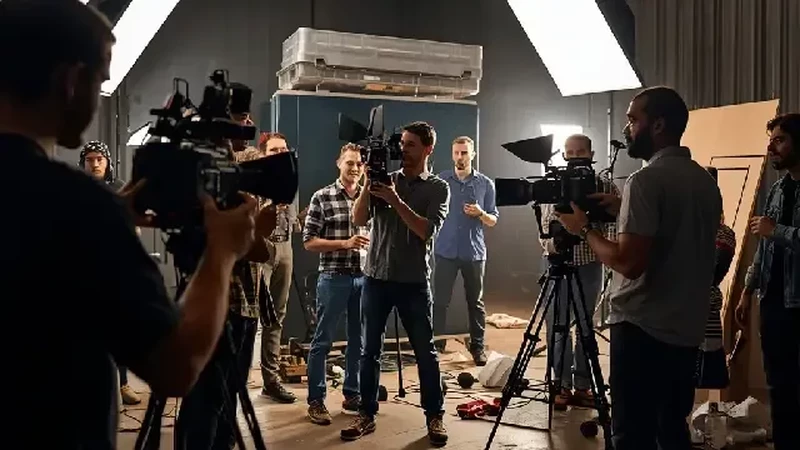
What does choosing a video production company actually involve? At its core, it means evaluating a team's creative capabilities, local market knowledge, production infrastructure, and communication style before signing a contract. In the Salt Lake City market specifically, the right fit also depends on how well a company understands Utah's unique business landscape, filming regulations, and visual aesthetic. |
91% of businesses use video as a marketing tool — and those that do grow revenue 49% faster than non-video users. Wyzowl State of Video Marketing Report, 2024 |
That investment deserves a vendor you trust. Here are the seven questions every Utah business should ask before signing a production contract.
1. Do They Have Proven Experience in Your Industry or Content Type?
The first thing to look at is not their gear list or their client logo wall. It is whether they have produced the specific type of content you need, for a business that looks like yours. A company that excels at documentary work is not automatically the right choice for a fast-paced restaurant commercial. A team with a portfolio full of corporate talking-head videos may not have the storytelling instincts for a brand film.
In Salt Lake City, the business landscape spans tech companies along the Wasatch Front, healthcare systems, outdoor brands, and a fast-growing restaurant sector. Each of those verticals has its own visual language. Ask to see two or three samples that are as close as possible to what you are trying to produce, not just their best work overall.
In our experience, clients who skip this step are the ones who end up disappointed. A reel full of cinematic nature shots is beautiful — but it will not tell you whether a team can direct a CEO on camera or shoot a high-energy product launch in a Salt Lake City convention center.
What to look for:
Work samples in your content category (commercial, corporate, event, brand film)
Recognizable clients or projects in similar industries
Evidence of range — can they adapt to different tones and formats?

2. Are They Based in Salt Lake City - Or just Claiming to Be?
This question matters more than most clients realize. The Salt Lake City video production market has seen an influx of out-of-state companies and freelancer networks that list local cities in their SEO but have no real presence in Utah. They win the job remotely, then send a crew that has never been to the location, has no local vendor relationships, and has to figure out permits and logistics from scratch on your dime.
A genuinely local team brings something money cannot buy on a tight timeline: familiarity. They know that the light at Red Butte Garden hits differently in late afternoon. They have existing relationships with Salt Lake City permit offices. They know which venues on South Temple require advance notice and which rental houses can turn around a last-minute equipment swap.
Ask directly: where is your crew based? Who will be on set? Will you be subcontracting any of this work to out-of-state contractors?
Red flags to watch for:
A website that lists 15 different cities with identical service pages
No physical address or local phone number
Crew bios that mention other states as home markets
Inability to meet in person before the shoot
Videos produced by local teams with on-the-ground knowledge are completed on budget 34% more often than those using remote production coordination. Production Hub Industry Report, 2023 |
3. What Does Their Pre-Production Process Look Like?

Pre-production is where the quality of a video is actually decided. It is the discovery process, the scripting, the storyboarding, the location scouting, the shot list, and the scheduling — all before a single camera turns on. Companies that rush or skip this phase produce videos that look technically fine but miss the strategic mark entirely.
Ask any candidate to walk you through exactly what happens between signing the contract and the first day of filming. A professional team should be able to describe a structured discovery process that includes understanding your audience, your goals, and your distribution plan. If their answer is 'we schedule the shoot and then show up,' consider that a warning sign.
In Utah, pre-production also includes practical logistics that matter: securing permits for outdoor locations in Salt Lake County, accounting for weather variability in the mountains, understanding indoor venue lighting at specific times of year, and coordinating around local events that could affect street access or background noise.
Questions to drill into:
How many pre-production meetings do you include?
Do you provide a script, or does the client write it?
Who handles location scouting — and do you have local scouts?
How do you handle changes between pre-production and shoot day?
Working with a team that treats pre-production as seriously as the shoot itself is the single biggest predictor of project success we have seen across hundreds of productions in the Utah market.
4. What Is Actually Included in the Quote — And What Is Not?
Budget transparency is where many client-vendor relationships break down. A quote that looks competitive at first glance can balloon significantly once revisions, additional shooting days, music licensing, color grading, and delivery formats are added. Ask every company you are evaluating to provide a line-item breakdown of what their quote covers.
For projects in Salt Lake City and surrounding Utah cities, you should also ask about travel costs if your locations are spread out, permit fees for public spaces, and whether talent (actors, voice artists) are included or billed separately. These are not extras — they are standard production costs that some companies bundle and others do not.
We are transparent about this because we have seen too many Utah businesses blindsided by a final invoice that looked nothing like the original estimate. A trustworthy video production company will give you a clear scope of work before you sign anything, and a clear change-order process for anything that falls outside it.
Line items to ask about explicitly
Number of shoot days and crew size included
Number of rounds of revisions in post-production
Music licensing (library vs. original composition)
Color grading and audio mixing
Final delivery formats and file transfer method
Travel, parking, and location fees
5. Who Will Actually Be On Your Project — The Person You Met, or Someone Else?
This is one of the most overlooked questions in the vendor selection process, and it catches clients off guard constantly. Many production companies sell work through a senior producer or creative director — and then hand the actual project to a junior team or a network of subcontractors. The reel you fell in love with was made by people who will not be at your shoot.
Ask specifically: who is the director on this project? Who is the director of photography? Will they be the same people involved in our pre-production meetings? Get names, not titles. Then look those people up. Review their individual work. If a company is reluctant to tell you who will be on set, that is information.
In a tight-knit market like Salt Lake City, reputation travels fast. Local crews tend to have established working relationships that translate into smoother shoots, faster problem-solving on set, and a shared creative shorthand that you can hear in the final edit.
At Eagle Wing Productions, the team you meet is the team that shows up. Our core crew handles every project from concept to delivery — no bait and switch. Learn more about who we are → |
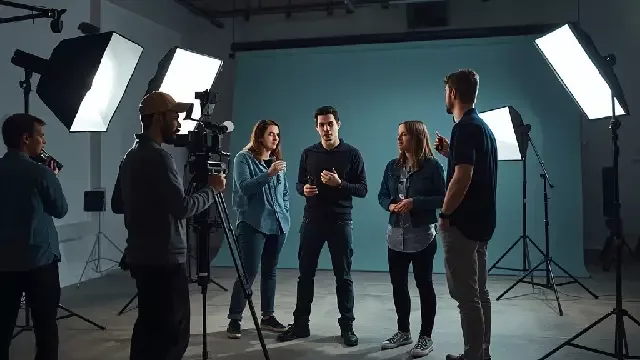
6. How Do They Handle Revisions, Feedback, and Approvals?
Post-production is where client relationships get strained — often not because the work is bad, but because the feedback process was never defined. Understand before you sign how many rounds of revisions are included, what counts as a revision versus a new request, and what the turnaround time is between your notes and the next cut.
The best companies use a structured review workflow: they deliver a rough cut on a specific date, give you a defined window to provide consolidated feedback, and deliver the next version within an agreed timeline. Vague promises like 'we will take care of it' and 'we are flexible' are fine for conversation but should be formalized in your contract before work begins.
For clients in Utah coordinating multiple internal stakeholders — which is common in healthcare, tech, and corporate environments along the Wasatch Front — a clear approval chain is especially important. Ask how the company handles feedback from multiple reviewers and whether they use any project management or review tools like Frame.io or Vimeo Review.
Revision process checklist:
How many revision rounds are included in the base package?
What is the standard turnaround time for each round?
Is there a cost for additional revisions beyond the included rounds?
How do you prefer to receive feedback — written notes, video call, or a review platform?
7. Can They Provide References From Recent Utah Clients?
Case studies on a website are curated. References are real. Before you commit to a significant production investment, ask for two or three client references from projects completed in the last 12 to 18 months — ideally from businesses in Salt Lake City or across Utah with similar project scopes to yours.
When you speak with those references, ask the questions vendors do not expect: Did the project come in on budget? How did the team handle problems on set? Was the final product actually used — and did it perform? What would you do differently if you hired them again? The answers to those questions will tell you more than any portfolio reel.
82% of marketers say video has a positive ROI — but only when it is produced with a clear strategy and a qualified team from the start. HubSpot State of Marketing Report, 2024 |
Choosing the right production partner in Salt Lake City does not need to be complicated. Ask these seven questions consistently, compare the answers honestly, and you will find yourself in a conversation with a team that is genuinely aligned with your goals.
You Have the Questions. Now Get the Right Answers.

If you have made it this far, you are serious about getting this right — and that is exactly the kind of client we do our best work with. At Eagle Wing Productions, we have spent years producing commercial, corporate, and brand video content for businesses across Salt Lake City and the broader Utah market. We know what a great production process looks like, and we are happy to walk you through ours before you make any commitment.
No pressure. No bait and switch. Just a transparent conversation about what your project needs, what it will realistically cost, and whether we are the right fit.
Ready to find the right video production partner in Salt Lake City?
Tell us about your project and get a clear, itemized quote within 48 hours. We work with businesses across Salt Lake City, Park City, Provo, and the wider Utah market.
Request a Free Quote →
Frequently Asked Questions
How much does it cost to hire a video production company in Salt Lake City?+
Costs vary significantly based on scope, but most professional video productions in the Salt Lake City market range from $5,000 to $50,000+. A focused corporate video or short commercial typically falls between $8,000 and $20,000 when produced by an experienced local team. The key is getting a line-item quote so you understand exactly what you are paying for — budget clarity at the start prevents surprises at the end.
How long does it take to produce a corporate video in Utah?+
Most corporate video projects in Salt Lake City take four to eight weeks from signed contract to final delivery, depending on the complexity of pre-production and the number of revision rounds. Projects that require extensive location scouting, on-camera talent casting, or multi-day shoots naturally take longer. A well-organized production team should be able to give you a realistic timeline before you sign, not after.
Should I hire a local video production company or a national agency?+
For most Utah businesses, a local Salt Lake City video production team offers real advantages: they know the locations, have existing permit relationships, can meet in person, and understand the regional market. National agencies can bring scale, but they often subcontract local work anyway — adding cost and a layer of communication between you and the crew on the ground. Local expertise, in most cases, is the better investment.
What is the difference between a videographer and a video production company?+
A videographer is typically a solo operator who handles filming and often basic editing. A video production company brings a full crew — director, DP, audio engineer, producer — along with structured pre-production and post-production workflows. For marketing videos, brand content, or anything meant to drive business results, a full production company approach produces work that is more strategic, more polished, and more effective.
How do I know if a video production company is right for my industry?+
Ask to see work samples in your specific content category — not just their best general reel. A restaurant brand video requires different skills than a healthcare explainer or a tech company culture film. The most reliable signal is whether a company can show you two or three projects that are genuinely similar to what you are trying to produce, made for businesses in comparable industries.
Do video production companies in Salt Lake City handle permits for outdoor shoots?+
Experienced local teams handle location permitting as a standard part of pre-production. In Salt Lake City, filming permits are managed through Salt Lake City Corporation's Film Office, and requirements vary by location and crew size. A professional production company should manage this process entirely on your behalf — it is one of the clearest advantages of hiring a locally established team over an out-of-town crew.
Start Your Project
Ready to Bring Your Story to Video?
Book a free strategy call, and we'll help you figure out which type of video will deliver the best ROI for your business.